Stink Bugs in the Bronx: Why These Invaders Cluster on Buildings Each Fall
Brown marmorated stink bugs invade Bronx homes and apartments each September and October, massing on sun-warmed walls before squeezing inside. Learn how to seal your building and manage stink bug invasions.
The Stink Bug in Urban New York
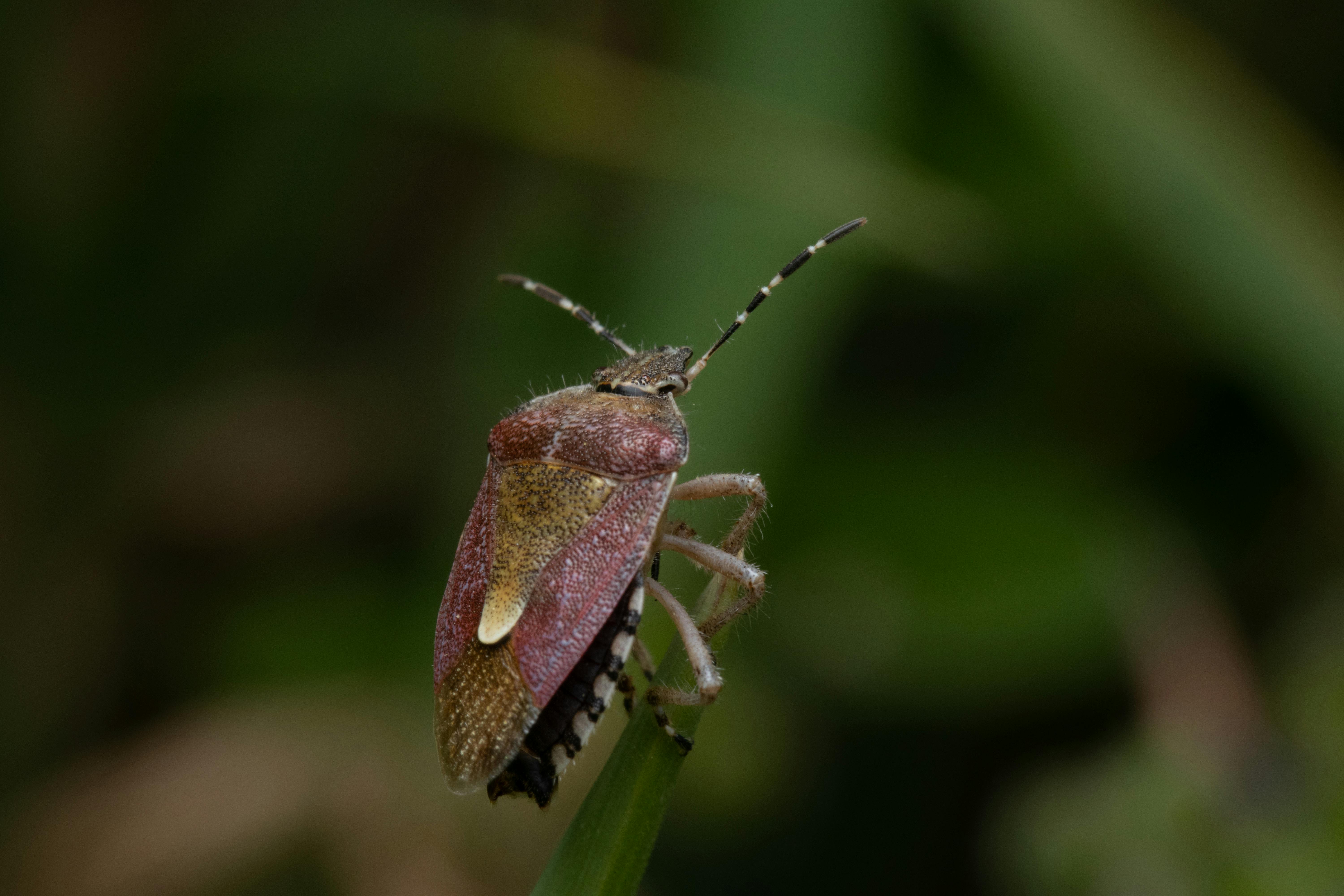
If you found a shield-shaped, mottled brown insect in your Bronx apartment this past fall, you encountered the brown marmorated stink bug — Halyomorpha halys — an invasive species from East Asia that has become one of the most unwanted fall houseguests in the northeastern United States.
The brown marmorated stink bug arrived in Allentown, Pennsylvania in the late 1990s, almost certainly in shipping containers from Asia. It spread rapidly throughout the Mid-Atlantic and Northeast, and by the 2010s had established itself firmly throughout the New York metropolitan region. Today it is a documented nuisance pest across all five boroughs, including the Bronx.
Most people associate stink bug invasions with suburban houses and farmland — and the agricultural damage stink bugs cause to fruit and vegetable crops in Hudson Valley and New Jersey farming regions has been well-publicized. But the Bronx presents its own stink bug challenge. The borough has an unusually extensive tree canopy for an urban area of its density, with Pelham Bay Park, Van Cortlandt Park, the New York Botanical Garden, and the Bronx Zoo's green spaces together supporting robust outdoor stink bug populations all summer long. When fall arrives and these insects begin seeking overwintering shelter, the Bronx's residential buildings — with their extensive south-facing brick walls, numerous architectural gaps, and proximity to green space — become stink bug destinations.
Understanding what stink bugs are, why they invade in fall, and how to keep them out of your Bronx home makes the difference between a manageable nuisance and a genuinely disruptive autumn infestation.
Why Stink Bugs Invade Buildings in Fall
The brown marmorated stink bug is an overwintering insect with a very specific seasonal behavior pattern that explains why invasions happen so predictably each year.
Through spring and summer, stink bugs feed on trees, ornamental plants, vegetables, and fruit in the outdoor environment. They are agricultural pests, not urban ones, during the warmer months. As days shorten and temperatures begin dropping in late August and September, the stink bug receives hormonal signals that trigger diapause — a dormant state similar to hibernation. To survive winter, it needs a sheltered location that stays above freezing and has relatively stable temperatures.
In natural habitats, stink bugs overwinter under bark, in rock crevices, and in dead logs. In an urban and suburban environment, the inside of a building is a far superior overwintering site. Buildings stay warm, stay dry, and provide dark, protected voids — exactly what a stink bug needs to survive four to six months of dormancy.
The behavioral pattern is striking: on warm, sunny days in September and October, stink bugs aggregate on the sun-warmed south- and west-facing surfaces of buildings, absorbing heat before attempting to enter. You may see dozens or even hundreds of them walking slowly on your building's exterior walls on a bright October afternoon. These are not random bugs passing by — they are specifically attracted to the warmth signature of your building and are actively looking for entry points.
Once inside, they move into wall voids, attic spaces, and other dark interior cavities and enter diapause. They do not feed indoors, do not breed indoors, and do not damage structural materials. They simply go dormant. The problem comes in spring, when rising temperatures trigger them to wake up — and they emerge inside your living space looking for a way out.
The Bronx Stink Bug Situation
While stink bug pressure varies by location, Bronx neighborhoods with the highest exposure to green space are consistently the most affected.
Pelham Bay Park and its surrounding neighborhoods — Pelham Bay, Country Club, Throgs Neck, and Schuylerville — sit adjacent to 2,772 acres of woodland and wetland habitat that sustains large stink bug populations all summer. When autumn aggregation behavior begins, the residential buildings on the park margins see the highest density of stink bugs moving toward them.
Van Cortlandt Park similarly sustains summer populations that pressure the surrounding Woodlawn, Norwood, Wakefield, and Riverdale neighborhoods in fall. Riverdale is particularly notable — the neighborhood's extensive private landscaping, mature tree canopy, and large attached homes with many architectural details provide both summer habitat and abundant winter entry opportunities.
The New York Botanical Garden and adjacent Fordham University campus contribute to stink bug pressure in the Belmont and Fordham Heights neighborhoods. The Garden's 250 acres of horticultural plantings and woodland provide ideal summer habitat, and the residential buildings of surrounding Bronx neighborhoods receive autumn aggregation pressure from that population.
Even in more urbanized Bronx neighborhoods further from parks, stink bugs have established themselves in street trees and community gardens. The populations are lower, but autumn invasions still occur wherever there are tree canopies and south-facing building walls.
The Bronx homes most affected are the attached row homes of Pelham Bay, Throgs Neck, and Riverdale — buildings with extensive eave systems, multiple architectural features, mature surrounding landscaping, and the continuous exterior wall systems that stink bugs explore during aggregation. High-rise apartment buildings with fewer architectural penetrations generally see less interior invasion but more exterior aggregation on sun-facing walls.
What Stink Bugs Do (and Don't Do)
Understanding what stink bugs actually do — and do not do — is important context for managing the anxiety that a large invasion can produce.
Stink bugs do not bite or sting. They have piercing mouthparts for penetrating plant tissue, but they do not bite people or animals. They pose no venom risk.
Stink bugs do not breed inside buildings. There are no larvae, no eggs, no population growth occurring inside your home. Every stink bug inside your building during winter entered from outside in fall and will not reproduce there.
Stink bugs do not damage structural wood, insulation, wiring, or any building material. They are not destructive to the structure.
Stink bugs do not transmit disease to people or pets.
What stink bugs do is release a powerful, distinctly unpleasant odor when disturbed, crushed, or vacuumed. The defensive chemical they produce — a combination of trans-2-decenal and trans-2-octenal — is described variously as smelling like cilantro, skunky, or simply foul. The odor is not dangerous but is genuinely unpleasant, and crushing even a single stink bug in a room can make the space uncomfortable for hours.
In large numbers, stink bugs that have congregated inside wall voids can also stain light-colored surfaces with their excretions, and the aggregation pheromones they release actually attract more stink bugs — meaning a building that has been a successful overwintering site becomes progressively more attractive to stink bugs each subsequent year.
Where Stink Bugs Enter Bronx Buildings
Stink bugs are persistent explorers during fall aggregation. They will walk the entire exterior of a building looking for any gap that leads to a sheltered interior space. In Bronx homes, the most common entry points are:
Window air conditioning units are the single most common stink bug entry point in Bronx apartments and homes. A window AC unit fills the window opening but almost never seals it completely — there are gaps around the sides, top, and bottom of the unit, and many units are removed in fall, leaving a poorly sealed window opening at exactly the peak of stink bug invasion season. If you remove your window AC unit in September and leave the window with only a screen, you are leaving an open invitation.
Cracks in window and door frames — especially in older Bronx homes where wood frames have dried and contracted over decades — provide multiple entry points along each window's perimeter. What appears to be a hairline crack in aged wood trim is sufficient for a stink bug.
Sliding door frames typically have gaps at the top and side channels where the doors meet the frame — gaps that are particularly common in sliding glass doors that have seen years of use without maintenance.
Damaged soffit and fascia on the older row homes of Pelham Bay and Riverdale are a major entry point. Stink bugs that reach roofline level explore every gap where soffit panels have pulled away, where fascia boards have deteriorated, or where soffit meets roofline and flashing has lifted.
Attic vents without fine mesh screening are essentially open invitations. A standard louvered attic vent provides no barrier to stink bugs; only vents with insect screening behind the louvers provide protection.
Utility penetrations where any line or pipe passes through an exterior wall can harbor gaps that have never been sealed. Cable TV, satellite dish cables, gas supply lines, and outdoor hose bibs all create potential entry points.
Preventing Invasion: Before Fall
The most effective intervention is preventive sealing before the aggregation season begins. If you act in July and August, you can dramatically reduce the number of stink bugs that enter your Bronx home.
Window AC units should either be removed and windows closed and weatherstripped before September, or the gaps around them should be sealed with foam backer rod and caulk. If you leave your AC units in through October, use foam gap filler around the perimeter of each unit to eliminate the gaps that stink bugs use.
Weatherstripping on all exterior doors should be inspected and replaced if compressed or damaged. A door sweep on the bottom of every exterior door eliminates the floor-level gap that stink bugs enter through.
Window screens should be in good repair and fully seated in their tracks. A torn screen or one that doesn't fit properly in the frame provides easy entry.
Attic vents should have fine-mesh screening installed behind any louvered or open vent. This is a one-time installation that protects against stink bugs and other overwintering insects year after year.
Exterior caulking along window and door frames, where siding meets trim, and at any visible gaps in exterior surfaces should be refreshed wherever the existing caulk has cracked or pulled away.
What To Do When They're Already Inside
If stink bugs have already entered your home, the cardinal rule is: do not crush them. Crushing a stink bug releases the defensive chemical immediately. The smell is strong and lingers.
The most effective method for removing live stink bugs is a vacuum cleaner — but you must use a vacuum bag and remove the bag immediately after vacuuming, taking it directly outside. Bagless vacuums will retain the odor in the bin. After vacuuming, place the bag in a sealed plastic bag before disposing of it outdoors.
A simple trap can be made by placing a bowl of soapy water under a light source at night. Stink bugs are attracted to light, and when they fall into the soapy water, the surface tension is broken and they cannot escape.
Do not use aerosol sprays inside wall voids to kill overwintering stink bugs — spraying large numbers of dead insects inside a wall creates a secondary pest problem when the carcasses attract carpet beetles and other scavengers.
Professional Treatment for Bronx Properties
Professional perimeter treatment in late August through September, before peak aggregation, significantly reduces the number of stink bugs that enter your home during the invasion window.
We apply residual insecticide to exterior building surfaces — focusing on south- and west-facing walls, eave and soffit areas, window and door frames, and any architectural features where stink bugs aggregate. This creates a contact-kill barrier during the critical four to six week period when stink bugs are actively seeking entry. The timing of this treatment is essential — a perimeter application in mid-September interrupts the invasion at its peak.
Frequently Asked Questions
Why is there a shield-shaped bug in my apartment?
You are looking at a brown marmorated stink bug — a harmless invasive species that entered your home seeking a winter shelter. It will not bite, breed indoors, or cause any damage.
Do stink bugs lay eggs indoors?
No. Stink bugs only reproduce outdoors on plant material during summer. Any stink bugs inside your home during winter are dormant adults that entered in fall.
How do I get rid of the smell after crushing one?
Wash affected skin with dish soap and hot water. For fabrics, baking soda applied to the affected area and left for 30 minutes before laundering helps neutralize the odor compounds. Ventilating the room is the most effective remedy for ambient odor.
Call (917) 440-7459 Before Stink Bug Season
Don't wait until October when your Bronx home's walls are covered in stink bugs to address the problem. Call Bronx County Pest Control at (917) 440-7459 for a perimeter evaluation and pre-season treatment. We serve all Bronx neighborhoods including those adjacent to Pelham Bay Park, Van Cortlandt Park, and the Botanical Garden — the areas with the heaviest fall stink bug pressure. Free estimates available.